
Beneath every forest, a hidden web bigger than half a galaxy
The News
Researchers just published the first global map of mycorrhizal fungi — the secret network of thread-like fungus living underneath nearly every forest on Earth. If you stretched all those tiny threads end to end, they'd reach across about 10% of the entire Milky Way galaxy . The forests we know so well are sitting on top of a living, talking network we usually never see.
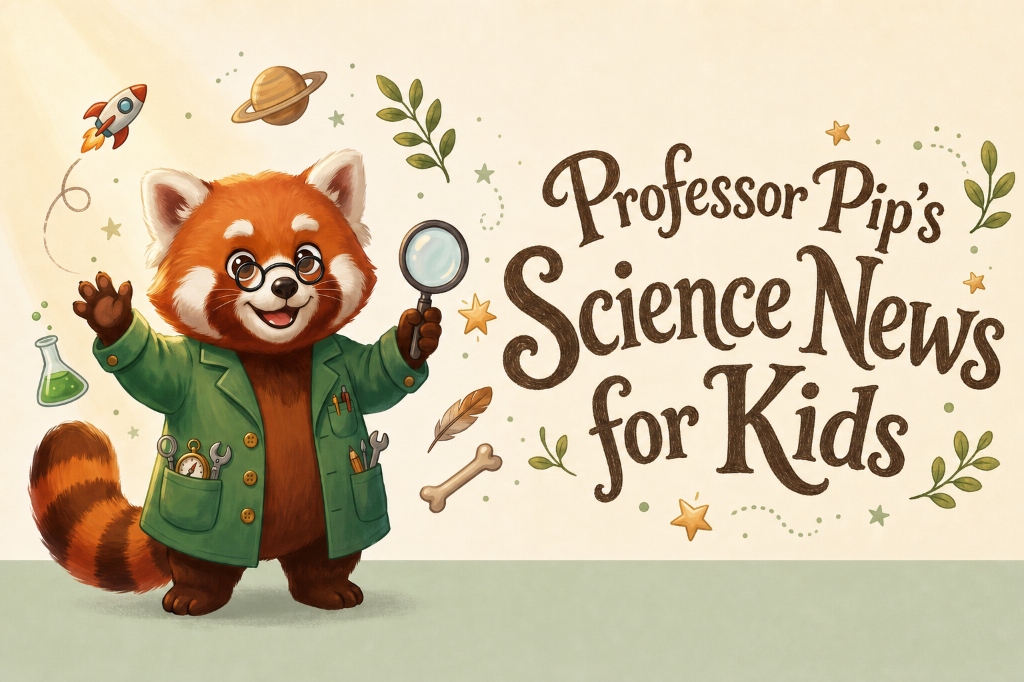
Professor Pip adjusted his slightly crooked spectacles and crouched low among the tall mossy trees. He patted his bulging lab-coat pockets and pulled out his magnifying glass and a long length of pale string. His notebook labeled "Notes" sat open on a flat stone.
"Today," Pip announced, his tail swishing behind him, "we're going on a hunt for the biggest thing in the whole world. And the best part is — you can't see any of it."
Mia and Leo and their new friend Asha gathered around in a little circle.
"The biggest thing in the world?" Asha frowned, scrunching up her nose. "How can it be biggest if we can't see it?"
"Because it lives underneath us," Pip whispered. "Right under our paws this very moment."
He gently lifted a small patch of soft green moss. Underneath, fine white threads spread out in every direction, thinner than a spider's silk, branching and weaving like tiny streets in a sleeping city.
"Oh!" gasped Leo.
"What ARE those?" Asha whispered.
"This," said Pip, holding the magnifying glass over the threads, "is mycelium. It's the body of a fungus. The mushrooms you sometimes see popping out of the forest floor? Those are just the little fruit. The real fungus is all of THIS — a huge web of threads that stretches and stretches under the trees."
He held up his string. "Now imagine these threads connecting one tree to another. And another. And another." He carefully stretched the string from one tree trunk to a second, then to a third. "Trees can actually send food and even little chemical warnings to each other through the fungus."
"WHAT?!" Leo's mouth dropped open. "Trees TALK through mushrooms?"
"In a way!" Pip beamed. "Scientists call it the Wood Wide Web. And this very week, they finished the first map of the whole world's mycelium. If you stretched all the underground fungus threads out in a single line…"
He paused dramatically, tail still.
"…they'd stretch across ten percent of our entire Milky Way galaxy."
The three children sat in stunned silence.
"Like the wifi at school?" Mia said finally. "But for trees?"
"Exactly right!" Pip clapped his paws. "Except instead of cat videos, the trees share sugars, and warnings, and water with each other."
He gazed up at the great green canopy above them. "Every step you take in a forest, my dear scientists, you're walking over a kind of conversation that has been going on for millions of years. Most of it, completely hidden."
Pip lowered the patch of moss carefully back down, like tucking in a blanket. "Now you try. Find a soft patch of moss somewhere this week. Lift it gently — just for a moment — and whisper hello to the threads underneath. Curiouser and curiouser indeed."
Spark a Conversation
- If trees can share food through fungi, what do you think one tree might "ask" another tree for?
- Why might a giant old tree share food with a tiny baby tree growing nearby?
- What other invisible networks can you think of that connect things in our world?