Professor Pip's Icy Adventure: A Journey into the World of Freezing Water
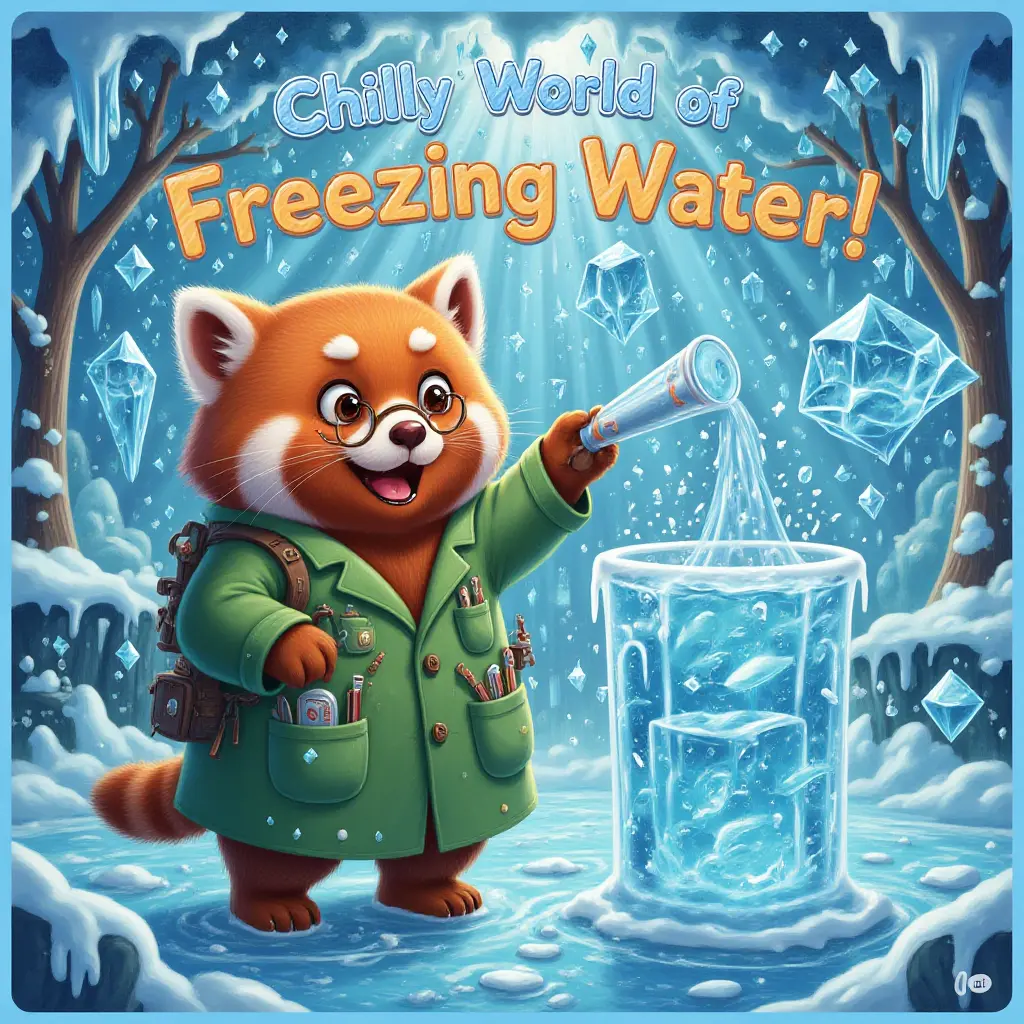

In the heart of the bustling animal university, where leaves rustled with secrets and streams sang songs, lived Professor Pip, the red panda. With his fluffy red fur and bushy tail, he was always ready for a new adventure. Today, he was particularly excited, adjusting his crooked spectacles, because he was about to explore the chilly world of freezing water!
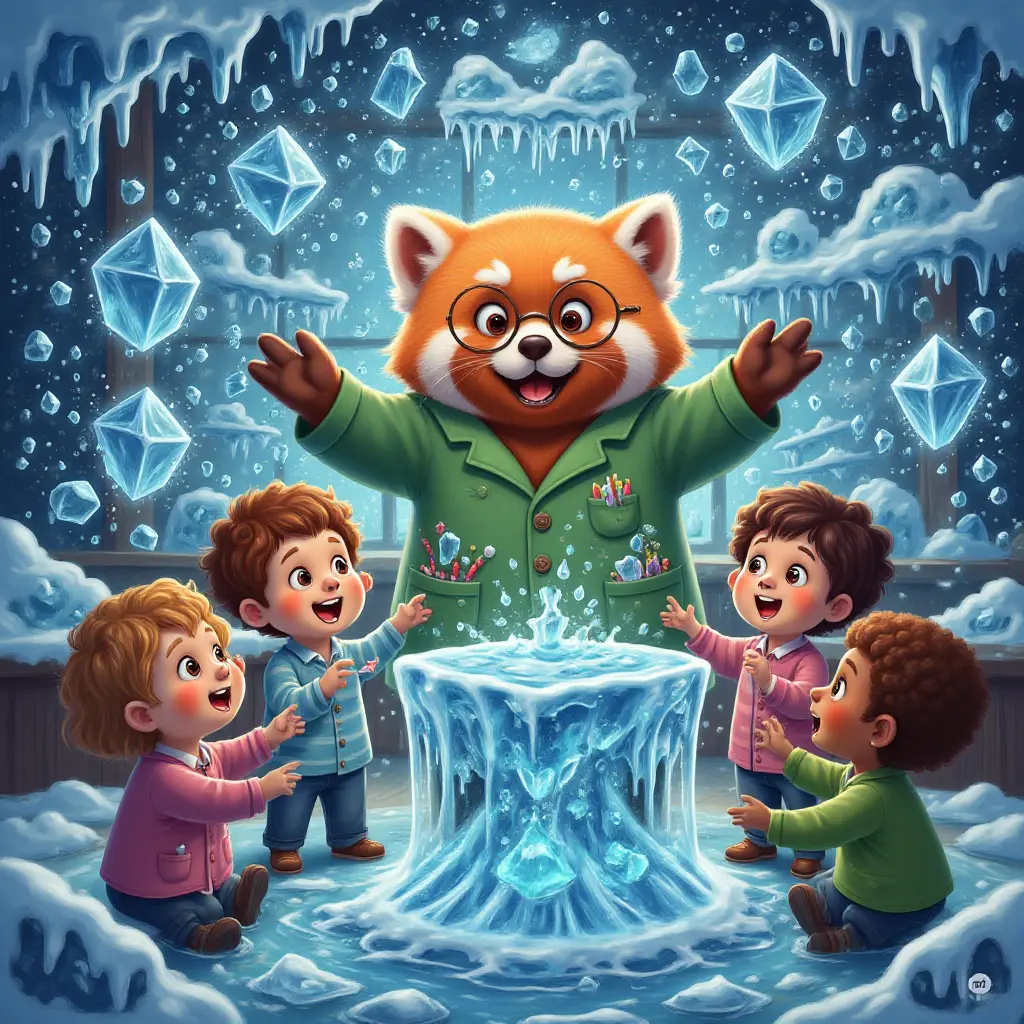
Professor Pip began his day in the classroom, filled with curious young animals eager to learn. He cleared his throat and announced, "Today, we're going to discover how water, which we drink and swim in, can turn into solid ice!" The room buzzed with excitement as the students imagined water turning into ice.

With a bounce in his step, Professor Pip led the group outside to a small pond in the heart of the university grounds. "Observe this liquid water," he said, pointing to the pond. "It's made of tiny parts called molecules. They are always moving around, bumping into each other."
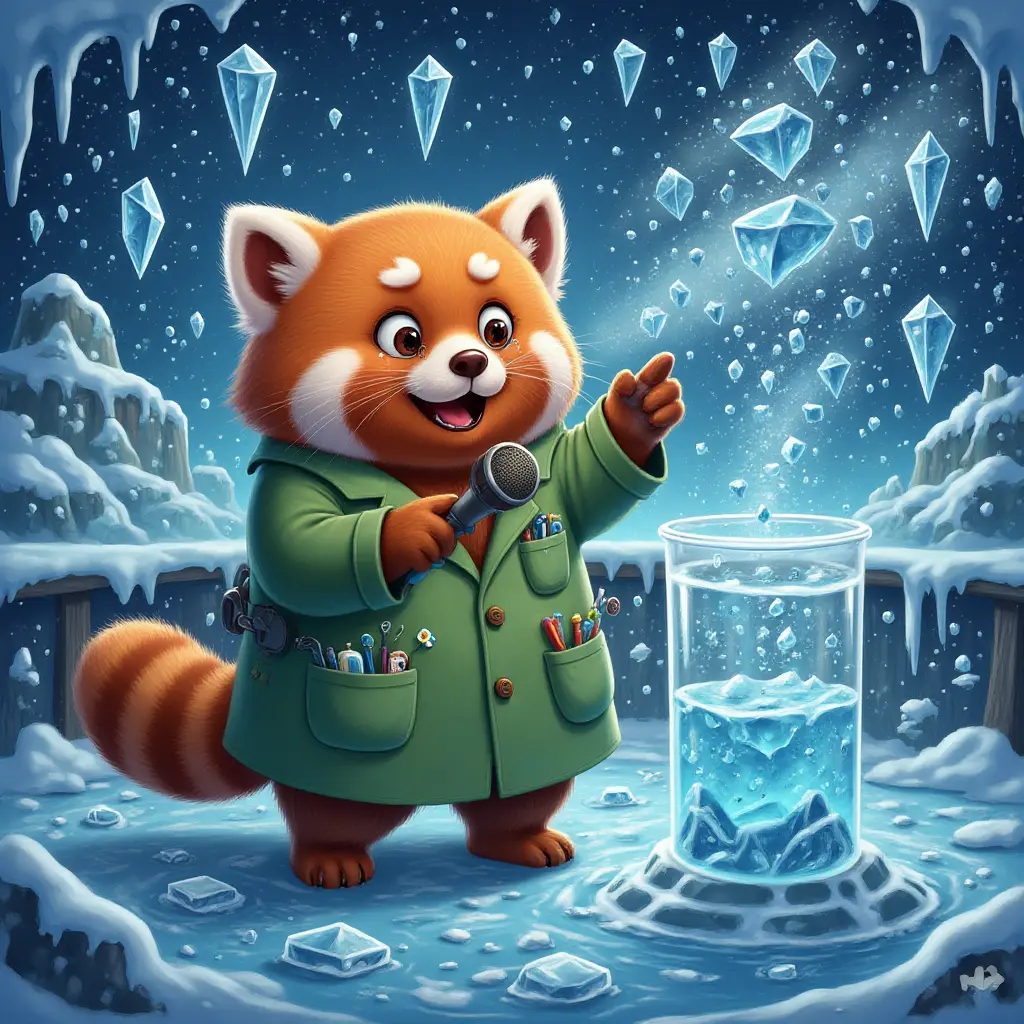
As the sun began to set, casting golden hues over the water, Professor Pip continued, "When water gets very cold, the molecules slow down. They start to stick together instead of moving freely. This is what begins the process of turning into ice."

He then pulled out a large, shiny thermometer from his lab coat pocket and dipped it into the pond. "Temperature plays a big role in this transformation," explained Professor Pip. "Water freezes at zero degrees Celsius, which is also called the freezing point."

The students, bundled in their warmest scarves and hats, watched as the temperature on the thermometer slowly dropped. "As the temperature goes down, watch how the water begins to change," said Professor Pip, his eyes twinkling behind his spectacles.
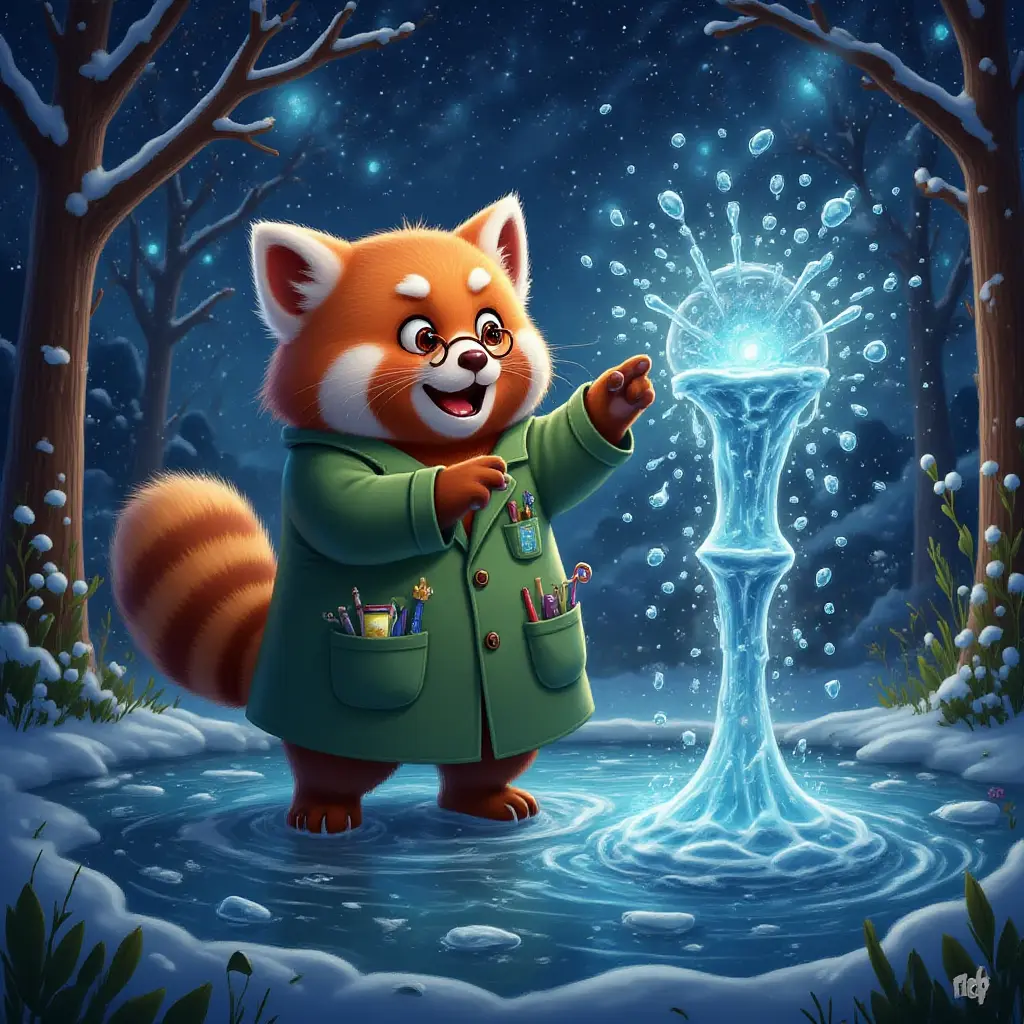
Sure enough, as the night grew colder, a thin layer of ice started forming on the pond's surface. The students gasped in delight. "The molecules have slowed down so much that they've locked into place, forming a solid," Professor Pip explained, his tail twitching with enthusiasm.

To make the lesson more fun, Professor Pip handed out magnifying glasses. "Take a closer look at the ice. Can you see how the surface is smooth and solid?" The young learners leaned in, their eyes wide with wonder as they explored the icy texture.

"Now, let's do an experiment," said Professor Pip, clapping his paws. He took out two identical cups filled with water. "We will leave one cup outside here, and one we will keep inside where it’s warm. Let’s see what happens by tomorrow morning."
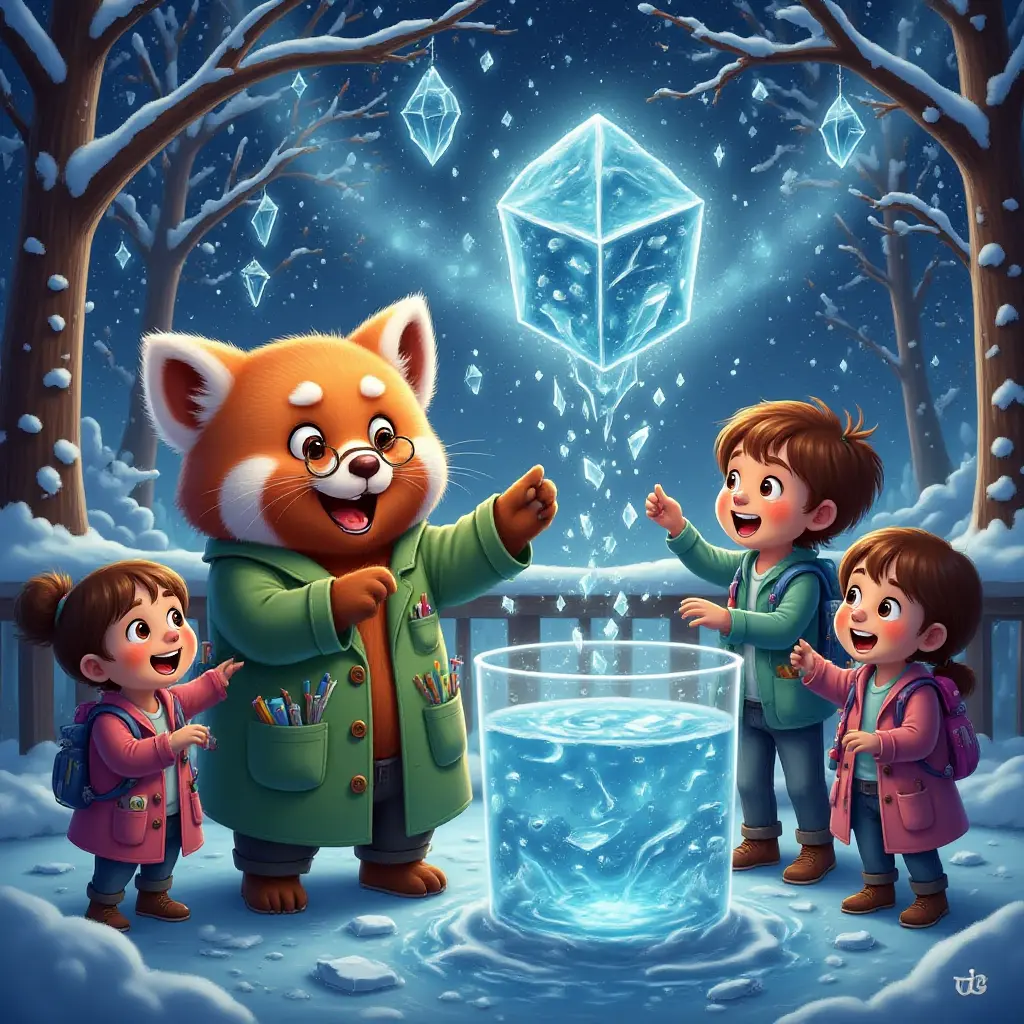
The next day, the students rushed outside to see the results. The cup left outside had turned into ice, while the one inside remained liquid. "Temperature controlled the state of the water," Professor Pip concluded, helping the students understand the effect of cold.

As a final surprise, Professor Pip revealed a tray of colorful ice pops, made from freezing juice overnight. "Even though it's cold, we can enjoy the science of freezing!" he chuckled, handing out the treats.

Each student enjoyed their icy pop, their minds buzzing with new knowledge about how water turns into ice. Professor Pip smiled, pleased with the day's adventure into the chilly world of freezing water. And as the sun warmed the clear sky, the little pond began to whisper back to its liquid state, ready for more days of learning and fun.
The End
Professor Pip's Icy Adventure: A Journey into the World of Freezing Water
About the Author
Dan Mayer

Other Pretheory books:
- Professor Pip's Deep Sea Adventure: Discovering the Ocean's Wonders:
- Lucy and Mia's Magic Stone: Adventures Around the World
- Theo The Great: The World At Sleep
- Professor Pip's Bug Adventure: Discovering the Wonders of Insects:
- Professor Pip's Green Thumb Adventure: The Magic of Photosynthesis:
- Sisters Lucy and Mia: Jumping Over Fences and Into Adventure